
Tasmanian Boat Registration Requirements set out who must register a boat, how your boat registration must be placed on your hull, and how tenders and interstate craft are treated.
Rules below follow Maritime & Safety Tasmania.
Vessel Registration Requirements in Tasmania
- Minimum Boat Rego Height: 150 mm
- Where to Install: On both sides of the hull above water line
- Vinyl Lettering Colour: A contrasting colour to the hull (dark on a white boat; light on a dark boat) Registration label: Queensland no longer issues a registration label to display.
- Minimum Jetski Rego Height: 100 mm
- Marine Grade Vinyl
- Tenders not longer than 4.5 metres and used within a distance of 920 Metres of the larger yacht/boat need to display the registration number of the larger vessel.
For fast, compliant display of your registration numbers, our marine‑grade boat registration stickers meet all Tasmanian visibility and durability requirements.
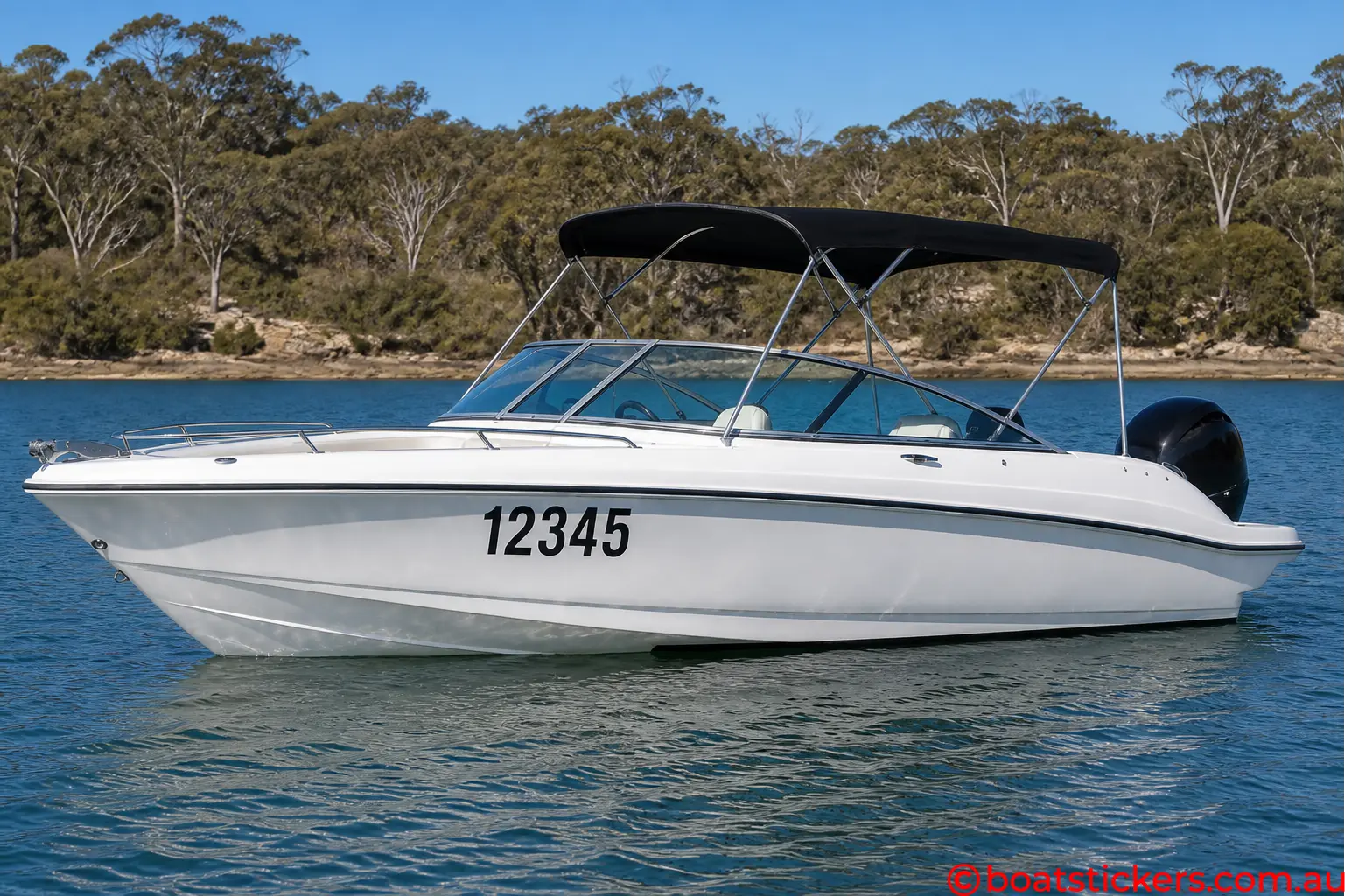
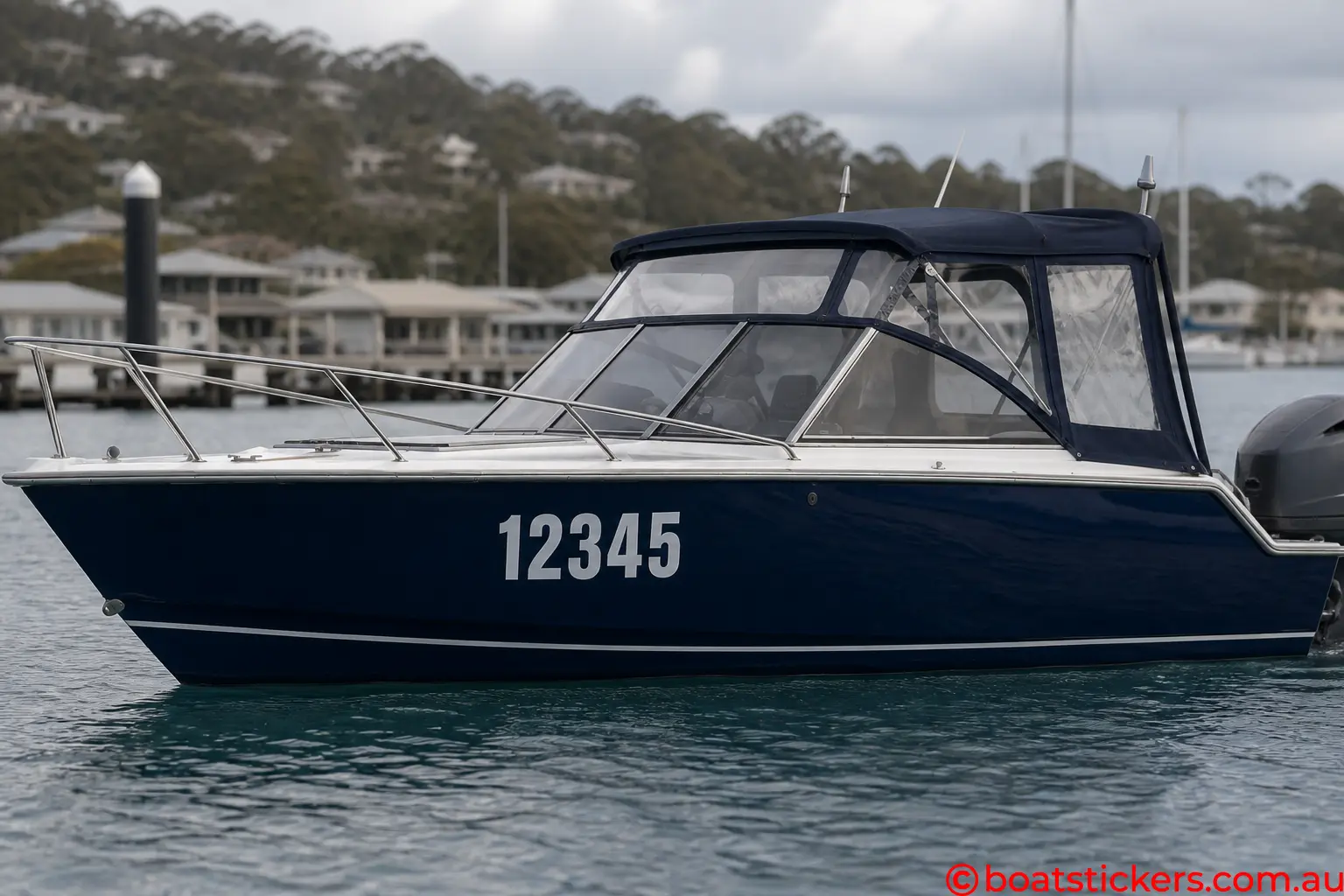
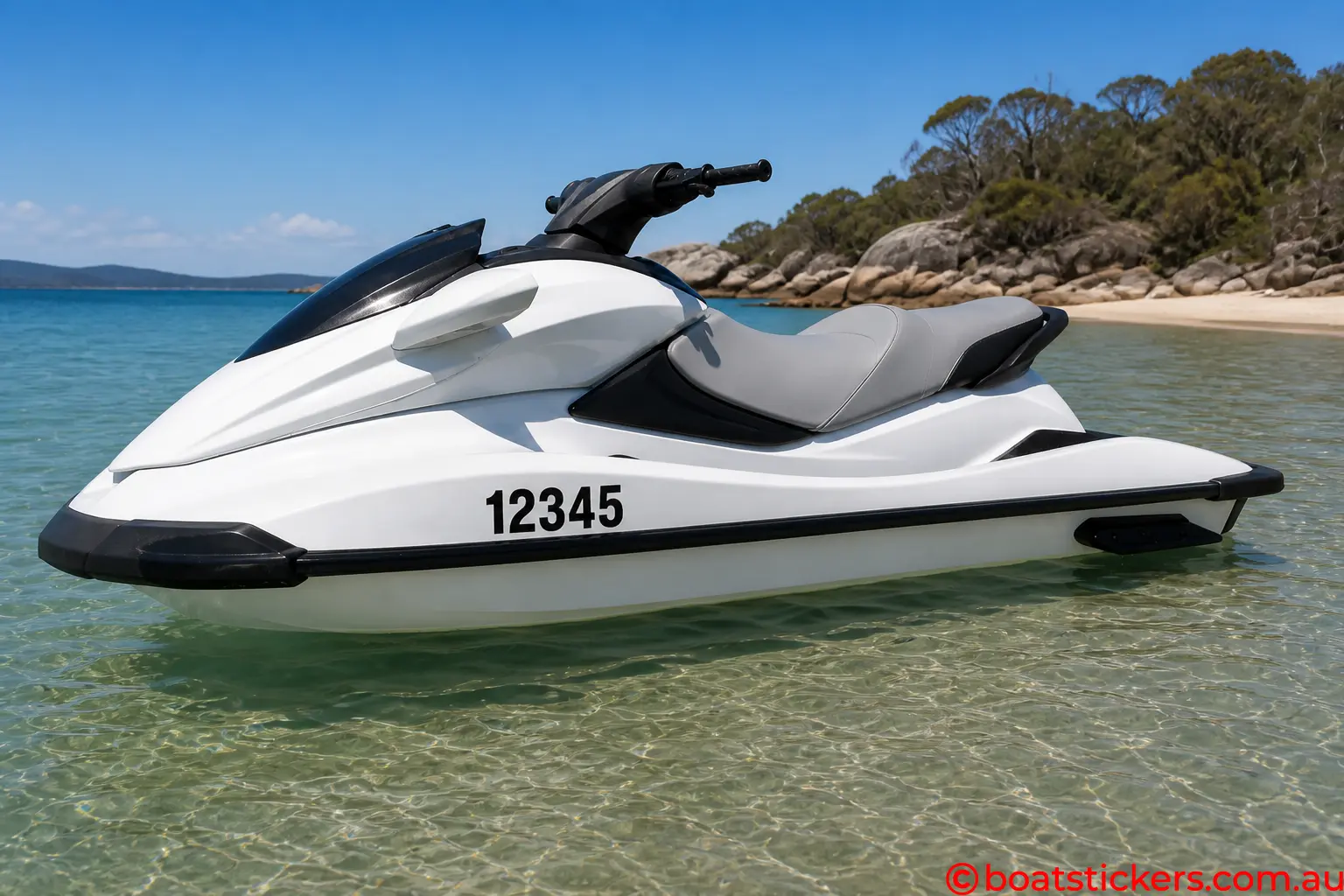
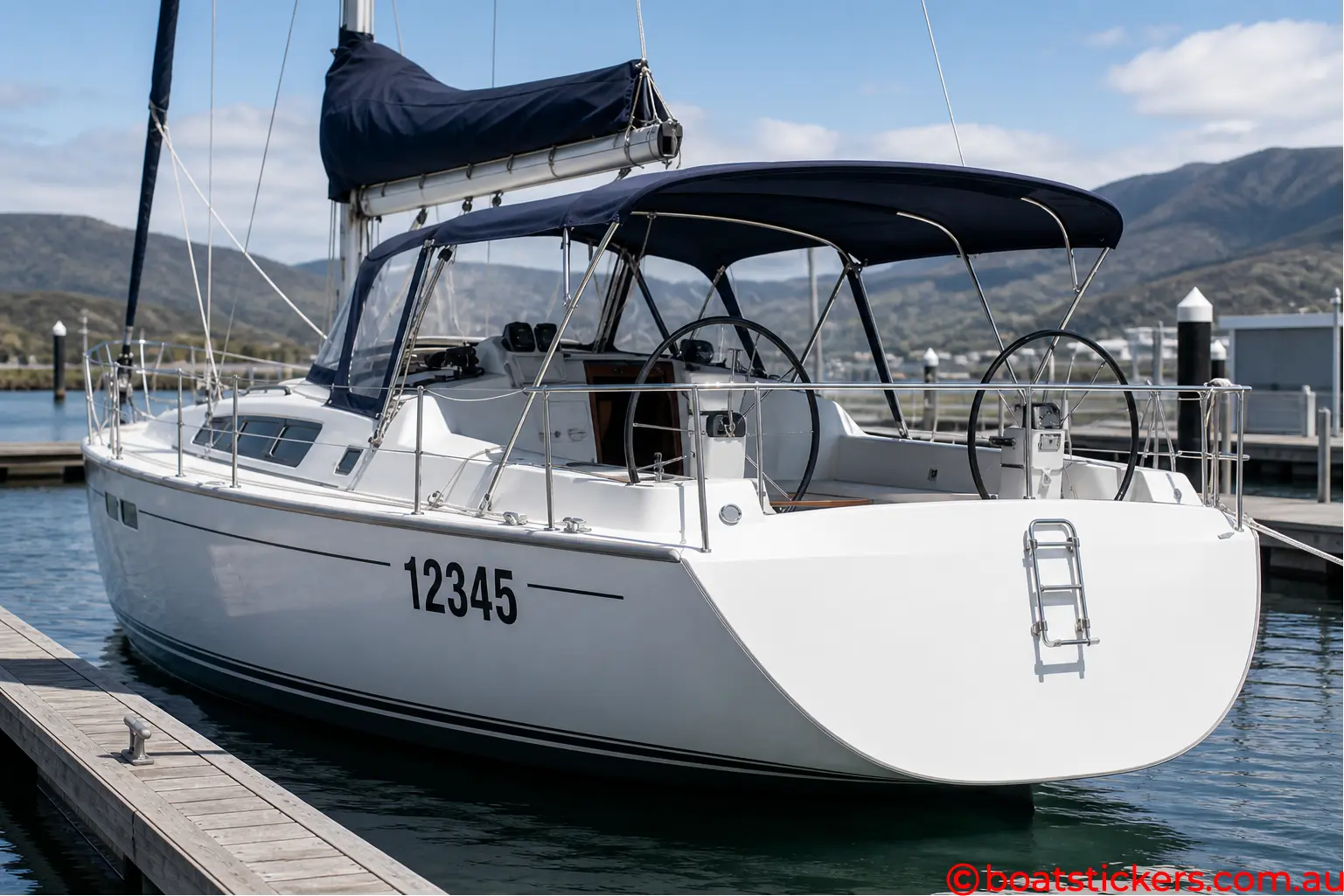
All recreational vessels with a motor of 4 horsepower or more must be registered and display boat registration numbers.
To meet these Tasmanian display rules, you can order compliant boat stickers from our main Boat Stickers page.
The application includes a declaration that the boat will not endanger a person because of its condition: a hull or part so unsound that the vessel is unfit for the voyages it was designed to make; an engine more powerful or heavier than the manufacturer or Australian Builders Plate allows; or missing or damaged reserve buoyancy. MAST will not register a boat without that declaration, and it can cancel registration if it later considers the vessel unsafe.
Side Note: Recreational boat registration is for private use only.
If you own a boat for the purpose where people need to pay to board or a charter these vessels must be must be in commercial survey with AMSA.
The Dangers of Fishing and Cruising in Tasmanian waters
Boat Registration Numbers help in an emergency situation where Tasmania’s fishing is excellent, and it is also unforgiving.
The Department of Natural Resources and Environment Tasmania notes that conditions here can be cold and rough, whether you fish from a boat or from shore. Weather shifts fast. A calm morning around Bruny Island or Maria Island can turn into steep, short seas by afternoon. Marine and Safety Tasmania (MAST) tells skippers to check Bureau of Meteorology coastal forecasts before they leave, and again while they are out. If the wind, swell or tide is wrong, cancel the trip.
The water itself is a hazard. MAST records sea temperatures from about 8°C in winter to 18°C in summer. Inland waters can be colder still. Heat leaves the body far faster in water than in air. Cold shock, swim failure and hypothermia can follow a fall overboard in minutes, even in summer. A life jacket matters more here than in warmer states.
Islands do not make a trip safer by default. King Island and Flinders Island sit in Bass Strait, where shallow water, strong tide and funnelled wind build a nasty sea. Maria Island and Bruny Island look close to the east and south-east coasts, yet they sit outside many “sheltered waters” limits once you leave the lee. Maatsuyker Island and the south-west carry Southern Ocean swell with little shelter. Rock fishing on exposed ledges — Tasman Peninsula, the west coast, island headlands — is especially dangerous. NRE Tasmania’s advice is simple: do not fish alone, do not turn your back on the sea, and never trust a rising swell.